
Table of Contents
How to Find Exhibitor and Attendee Data That Drives Pipeline?

Why Most Event Outreach Fails (And How to Lock In Meetings Early)
Finding verified, filtered, and fresh trade show exhibitor and attendee data that produces meetings before the event opens is where most teams get stuck. The companies that walk away with a real pipeline are the ones who had the right contacts early and had meetings confirmed before the show floor opened.
This guide covers both sides of B2B event data. Verified exhibitor lists for vendor sourcing, partnerships, and competitor research. Trade show attendee contact lists for direct sales pipeline. What each includes, where to get it, how to filter it, and how it translates into booked meetings.
1. Why Is B2B Event Data Worth Getting in the First Place?
Retrieve a contact from ZoomInfo or Apollo and you will receive a name, a title, and a company. To know for sure if that contact has active intentions to assess solutions or purchase during the current quarter, you need to turn to a source that would measure intent, which cannot be obtained via any generic database.
Event data does that because there is intent already. The buyer of CPHI Milan has reserved their spot on the event, paid a registration fee, and informed the organisation that they will evaluate pharmaceutical suppliers. The exhibitor of Electronica Munich has signed a contract and allocated their budget for exhibiting on a stand in front of 80,000 industry professionals. They are all committing resources in order to communicate with the market, making them a completely different breed than people just holding relevant job titles on LinkedIn.
CEIR research found that 81% of trade show attendees have buying authority and 46% are in a first-time purchase situation when they attend. That buying intent, though, looks different depending on which side of the event someone is on, and which list you buy depends entirely on where your ICP sits.
2. Exhibitor List or Attendee List: Which One Do You Actually Need?
An exhibitor has paid to be seen. An attendee has paid to evaluate. Those are opposite positions at the same event, which is why the two lists exist separately and why the wrong one sends your outreach to people with no use for it.
Choose the exhibitor list if you sell something exhibiting companies buy: booth design, event logistics, marketing technology, freight forwarding, staffing, or any B2B service tied to exhibiting. It is also the right choice for partnership outreach and competitor mapping. Key contacts are marketing directors, VPs of Sales, and C-level decision-makers who sign vendor relationships.
Choose the attendee list if your ICP is a procurement director, CTO, Head of Operations, or category buyer. These are the people visiting to evaluate solutions, and most have gone uncontacted by a salesperson in the 12 months before attending.
Some teams run both from the same event as two separate campaign tracks, two audiences from one research investment. Once you know which list fits your ICP, the question is where to actually source verified trade show contact data.
Also read- Where to Find the Best Exhibitor List Providers in 2026?
3. Where Do You Get Verified Trade Show Contact Lists?
The most obvious places to look tend to produce the least usable data.
Event organiser websites give registered company names only, no emails, no contacts. LinkedIn RSVP data stays locked inside the platform and cannot be exported at scale. Generic B2B databases carry industry contacts rather than verified attendees or exhibitors at a specific show. Post-event badge scans arrive after the event closes, missing the window where response rates are highest.
A dedicated event data platform solves all of this by maintaining pre-built exhibition contact lists for specific shows, updated as rosters are confirmed and registrations open. The global trade show events database covers hundreds of shows across every major industry with verified emails, phone numbers, job titles, LinkedIn profiles, and CRM-ready exports. It also covers conferences, virtual events, and hybrid formats, so niche annual events are included alongside major exhibition floors.
Before buying, request a free contact data sample to verify field quality for your target event.
4. What Should a Trade Show Contact List Actually Contain?
A large list underdelivers fast if the fields are incomplete or the data is stale. Before purchasing, confirm it includes:
- Verified direct emails rather than generic info@ addresses
- Job title specific enough to confirm seniority
- Company name, size, and website for ICP matching
- Country and city for territory segmentation
- Phone numbers for call and SMS follow-up
- LinkedIn profile URLs for multi-channel outreach
- Event name and year confirming the data is event-specific
The metric that matters most is verified direct email coverage rate. A 15,000-record list at 30% coverage gives 4,500 usable contacts. An 8,000-record list at 90% gives 7,200. Always ask for this figure before committing.
B2B event contact data decays at 15 to 20% per year. Ask for the last verification date rather than the compilation date. Most providers default to the latter unless asked directly.
5. How Do You Filter Event Data by Country?
Unfiltered global lists break territory-based campaigns fast. A rep covering DACH working through Southeast Asia contacts wastes budget and skews every performance metric.
The country-specific event contact database covers 100+ markets:
- Europe
- Middle East
- UAE: GITEX Global, Arab Health, DUPHAT (Jun/Jul 2026), Dubai International Boat Show (Nov 2026)
- Saudi Arabia: LEAP Riyadh (Aug/Sep 2026)
- Americas and Asia-Pacific
Country filters stack with industry and seniority, so getting to VP-level procurement contacts at pharmaceutical events in Germany takes two filter selections. Industry is where most teams make the costlier mistake.
Also read- 10 Best Event Intelligence and Trade Show Data Providers in 2026
6. How Do You Filter Event Data by Industry?
A cybersecurity vendor has zero pipeline value in contacts from a food packaging expo. Filtering your trade show data to your vertical before purchasing is the baseline, and skipping it means paying for contacts your team will never convert.
The industry-specific trade show contact database covers:
- IT and Technology: CES, Web Summit, MWC Barcelona, GITEX, LEAP Riyadh
- Healthcare and Pharma: Arab Health, CPHI Milan, DUPHAT
- Electronics and Manufacturing: Electronica Munich, Chillventa, Glasstec
- Finance and Fintech: Banking, payments, and investment conferences globally
- Food and Beverage: Processing, packaging, and food tech expos
- Construction and Materials: Architecture, infrastructure, and materials events
- Energy and Renewables: Clean energy and utilities events globally
- Entertainment and Media: Broadcasting, content, and production events
Each vertical filters further by country, company size, and seniority. Once those are set, you have a list of your exact ICP at events where they are actively present. Turning that list into meetings is a sequencing problem, and it starts earlier than most teams expect.
7. How Does Event Data Turn Into Pipeline?
Six weeks out is the floor. Meeting slots fill in the final two weeks, so starting there means competing for whatever calendar space nobody else wanted.
Segment your filtered list into decision-makers (C-suite, VP, Director, Head of) and evaluators (managers, senior ICs) before writing anything. Same event, two different conversations. Decision-makers get messaging around business outcomes. Evaluators get specific use cases and how the product works.
- Week 1: Open with the event. Noting they will be at the show is the most effective first line in event-based outreach. You are reaching out as a peer they are about to share a building with. One line on what you do, one on a relevant outcome for a similar company, and one ask for 15 minutes at the show.
- Week 2: Follow up with a specific result from a company in their vertical. Same day, send a LinkedIn request with the event mentioned in the note. Email and LinkedIn together lift reply rates noticeably compared to email alone.
- Week 3: Name a specific meeting slot. The prospect confirms or suggests an alternative, removing the friction that kills most replies.
- Ten to twelve days out: One line. “Are you free for 15 minutes at [Event]?” People finalise schedules here and a direct ask converts contacts who never responded earlier.
- Within 48 hours post-event: Decision-makers process action items in the first two days after getting home. Reference something specific from the show rather than sending a generic follow-up. Post-event trade fair visitor contact data is also available for contacts outside your pre-event list.
8. How Do You Verify Data Quality Before Buying?
Four questions that separate reliable providers from ones that damage your sender reputation:
- When was it last verified, not compiled?
A list from a 2022 roster resold in 2026 with zero verification has lost 30 to 40% of its accuracy. Ask for both dates and expect a specific answer. - What is the verified direct email coverage rate?
85% or above is the working threshold. Below 60% and bounce rates will damage your sender domain across every campaign you run from it. - Is a free sample available?
Free event list samples are available for every list in the database. Use it to confirm seniority levels and field completeness match your ICP before spending anything. - What is the hard bounce refund policy?
Bounces reported within seven days should be refunded. A provider with a clear refund policy stands behind their deliverability numbers.
Full GDPR and CCPA compliance documentation is at exhibitorsdata.com/data-compliance.
9. What Kills the Value of Event Data Before You Use It?
Getting the right list is half the work. How you use it determines whether the purchase pays off.
Sending one unsegmented email to every contact treats a pharma procurement director and a junior tech marketer identically. It tanks deliverability and produces zero signal about what messaging is working.
Writing an email that skips mentioning the event discards the one thing that separates trade show exhibitor and attendee data from any other outreach list. The contact is on the list because of a specific event. That event is the reason for reaching out and should be the first thing they read.
Waiting until the event closes is the most expensive timing mistake. By the time the show ends, your prospect has spoken to dozens of vendors and is already prioritising whoever reached them first.
Buying data with an unconfirmed refresh cycle means the accuracy of the list is unknown from the moment you purchase it.
Also read- 8 Trade Show Attendee List Providers Worth Using (2026)
Start Before Everyone Else Does
Most teams treat event data as a post-show activity. The ones that consistently book meetings do the opposite. They get the trade show exhibitor and attendee data early, filter it to exactly who is worth reaching, and walk into the show with their calendar already full.
The exhibitor contact list and the trade show attendee list are where that starts. Filter to your event, industry, and territory. Confirm quality with a sample before committing. Start six weeks out.
FAQs
What is the minimum order size for an event contact list?
Lists are available for single events with targeted filters applied, so you buy exactly the segment you need. Reach out at exhibitorsdata.com/contact to discuss volume and pricing for your target event.
Can I request a list for an event that has not opened registration yet?
Yes. The global events database tracks upcoming shows and adds contacts as registrations open and rosters are confirmed. Place a request in advance and receive the data as it becomes available.
How quickly can I get the list after purchasing?
Most lists are delivered within 24 to 48 hours in your chosen export format, ready to load directly into your CRM or outreach tool.
What if the event I need is not in the database?
Submit your target event through exhibitorsdata.com/contact and the team will source it. Custom requests are handled for events outside the standard catalogue.
Can I use the data across multiple campaigns?
Yes. Purchased lists can be used across email, LinkedIn, calling, and SMS campaigns with no channel restrictions.
Do you cover smaller regional events or only major trade shows?
The industry-specific event database covers both flagship global shows and regional niche events. Smaller events often carry less outreach competition, which means higher reply rates than contacts from a major show.
What formats does the data export in?
Excel, CSV, and other CRM-compatible formats. API access is available for teams that need live data synced directly into their systems.
Is the data compliant for outreach in the EU and Middle East?
Yes. Full GDPR compliance covers EU markets including Germany, Italy, France, Spain, and the UK. Middle East outreach covering UAE and Saudi Arabia falls under the platform’s broader compliance framework. Full documentation at exhibitorsdata.com/data-compliance.
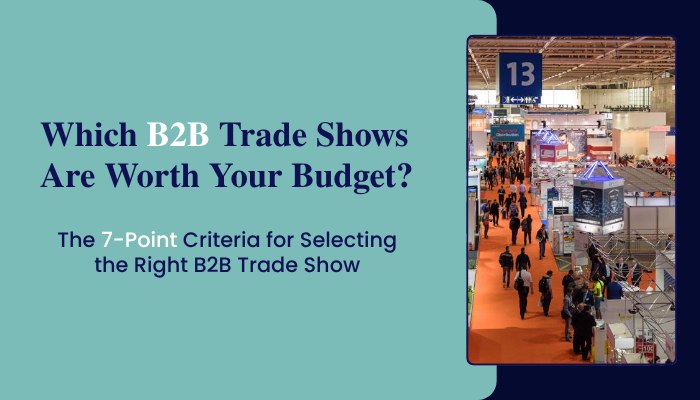
How to Choose the Right B2B Trade Shows in 2026: A Selection Checklist
A trade show can have 20,000 attendees and still be the wrong event for your sales team. The question before signing the contract is whether the people you need to reach will actually be there. According...