
Table of Contents
The Rise of Buying Groups at B2B Trade Shows
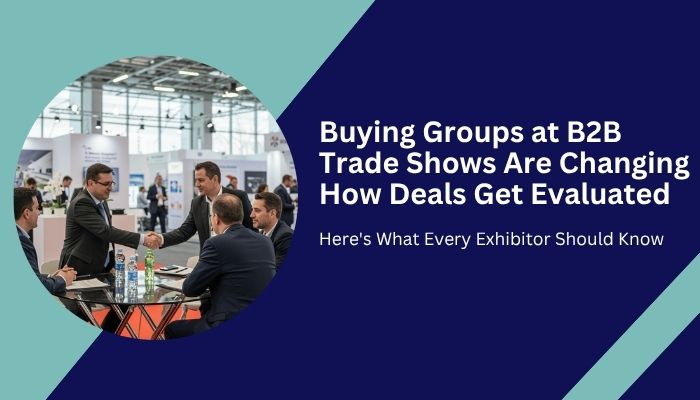
At trade shows, the first visitor from a target account rarely turns out to be the last. An engineer might stop by on the opening morning and ask about integration. Procurement follows that afternoon with questions about commercial terms. Finance shows up on the final day, asks about implementation costs, and leaves without picking up a brochure. Each conversation gets logged into the badge scanner as a separate interaction.
All three belong to the same buying decision. Most CRMs never make that connection.
Why Do Buying Groups Matter More Than Any Single Visitor?
Buying groups usually don’t show up all at once. The buyers arrive individually on their own schedules, bringing their own issues with them. The engineer wants to know about the integration and compatibility of systems. The security buyer cares about compliance and data security. The procurement buyer wants to compare prices and conditions, whereas the finance buyer wants to calculate the cost of ownership. Each discussion provides one piece of the evaluation. The full buying picture only becomes clear when those conversations are connected to the same account.
Most lead retrieval processes view each scan as an individual contact record, only connecting those contacts back to the same account when the process is manually done by the sales rep. The scanner collects the badge number, and the spreadsheet creates a new entry, but neither sees the correlation between three of those records.
Also read- What Can You Do With Exhibitor and Attendee Data Before a Trade Show?
How Have Buying Groups Changed the Show Floor?
The group asking those questions has grown. Forrester’s 2026 State of Business Buying report put the average B2B purchase at 13 internal stakeholders plus 9 external influencers such as consultants and peer references, climbing higher for complex or strategic deals. Gartner’s 2024 research found a lower baseline, 6 to 10 stakeholders for typical purchases. Smaller deals sit toward the low end. Larger and more technical purchases tend to involve more stakeholders. Manufacturing events such as Hannover Messe or IMTS commonly attract engineering, procurement, and operations teams evaluating the same project, often attending different technical sessions before visiting supplier booths.
That change is reflected in how exhibitors meet and qualify prospects during the event.
| Five Years Ago | Today |
|---|---|
| One attendee visits the booth | Multiple stakeholders attend across the show, often on separate days |
| One demo settles the decision | Several evaluations across functions before anyone signs off |
| A single follow up email after the show | Role-specific follow-up sent to each stakeholder who attended |
| One name in the CRM | A full buying group mapped against one account |
A few years back, a rep could spend half an hour with one visitor and treat that as the meeting that mattered. Many booth engagement strategies still assume one visitor represents the account.
Why Are More Stakeholders Involved At Trade Shows?
Buying groups have expanded for several reasons. Companies have spent the past few years trying to make purchasing faster: self-service trials, AI research tools, streamlined RFP templates. The number of people signing off on each purchase grew at the same time. Demandbase found 72% of B2B purchases now fall into the high-complexity category, spanning functions like IT, operations, finance, and end users instead of sitting with one department.
Several changes have made buying groups more visible at trade shows specifically:
• Procurement gets involved earlier, acting as a decision-maker from early in the buying cycle in 53% of cases rather than joining only at the contract stage.
• Trials have become the default before committing, with more than 60% of buyers completing one, rising to 78% on purchases over $10 million.
• AI-assisted research speeds up shortlisting, and many organisations still rely on in-person discussions to validate shortlisted vendors before making a purchasing decision.
For exhibitors, that changes the job on the show floor. The task is no longer collecting more badge scans. It’s recognising when several conversations belong to the same buying group.
What Do Most Exhibitors Miss About Their Own Leads?
Most exhibitors review individual contacts after an event. Few reviewed whether several of those captured six contacts actually belonged to the same buying group. An exhibitor walks away thinking they picked up six attendee interactions and sends six separate follow-up emails when what they actually met was one buying group, evaluated from several angles.
When those conversations stay disconnected, sales teams often qualify, assign, and follow up with the same account multiple times without realising it. That creates duplicate outreach to the same account, inconsistent messaging across the same deal, and an incomplete view of how much buying intent is actually behind an account.
How Do You Recognise A Buying Group Before The Event Starts?
Exhibitors who prepare early walk into a show already knowing which departments from a target account are coming and what to say to each one. They identify everyone likely to attend from a target account’s decision-making team, not just the one contact who registered first. They map those attendees to department and seniority. They check which competing exhibitors will be at the same event, since a buying group is often comparing options in the same afternoon. And they build talking points for each function expected to visit.
Verified attendee data that maps registrants back to target accounts covers the account and department mapping. Exhibitor list data for the same event shows who else the buying group will be comparing you against.
For teams deciding which shows are worth this level of preparation, a B2B trade show calendar filtered by region narrows the list to events where a target account’s buying group is most likely to show up in force. Filtering that calendar by industry specific event data sharpens it further for teams selling into a narrow vertical like manufacturing or healthcare.
Also read- 2027 Trade Show Calendar: 9 B2B Events & Exhibitor Lists
Why Doesn’t One Booth Script Work For A Buying Group?
A script built around product features works well for an engineer. Finance came to talk about cost, and feature depth doesn’t answer that. Procurement wants contract terms, not a product tour. By the time operations reach the booth, deployment timelines matter more than anything on the demo screen. A technical buyer and a finance buyer from the same account might visit within an hour of each other, and a booth team that can only speak to product features loses the second conversation entirely.
Also read- How to Get Verified Exhibitor Contacts in Minutes with Smart List Builder
Why Does Follow-Up Have To Change For A Buying Group?
A single generic recap sent to whoever handed over a badge first does not reflect a deal shaped by several people. By the time finance visits on the final day, the engineer’s questions about integration and procurement’s discussion of commercial terms should already be part of that conversation, not sitting in three separate CRM records nobody has connected yet.
After the event, closing that gap looks more like a short sequence than a single email:
• Group every attendee from the show by account instead of treating each badge as its own lead.
• Match each conversation to the stakeholder who had it, and note what they specifically asked about.
• Send follow-up built around that role: integration detail for technical buyers, ROI for finance, and terms for procurement.
• Coordinate the account internally so the sales team treats the visit as one deal, not four separate conversations.
Step one depends on knowing which stakeholders from the account attended and what role they play. That’s exactly what ExhibitorsData’s attendee and exhibitor intelligence is designed to support. Teams can also review how that data is sourced and verified before relying on it for a major event.
As more purchasing decisions now involve several stakeholders from the same account. Exhibitors that recognise those relationships before and during the event and follow up at the account level rather than the individual level get a clearer picture of which opportunities are actually moving forward.
Six badge scans do not always represent six separate buying opportunities. Quite often, they represent one buying group making one decision.
AI Sales Prospecting with Event Data: What Changes?
AI Sales Prospecting with vs Without Event Intelligence AI sales tools now handle a large share of a B2B rep's working day: the account list is ranked before the first meeting, the sequence is drafted before the...