
Table of Contents
10 Experiential Marketing Trends B2B Trade Shows Need to Watch for 2027
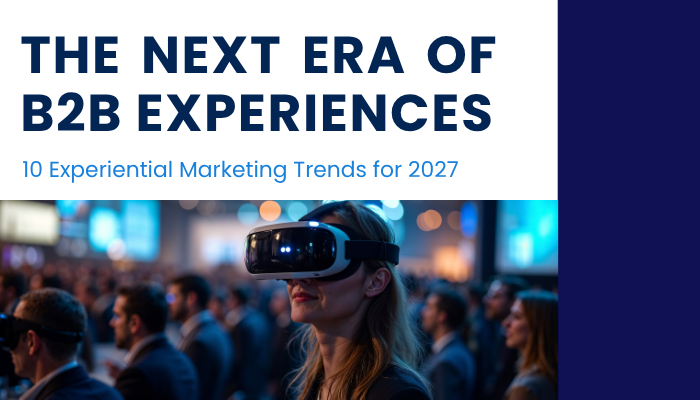
Experiential marketing at a B2B trade show means giving visitors something to do or receive at the booth, such as a demo, a game, a printed card, or a drink made for them, and starting the sales conversation from there. Booths in 2026 show floors already run these activities in new ways, and exhibitors who spot the changes early can book better shows, build stronger activations, and report results that finance teams accept.
Nobody can measure 2027 yet, but the 2027 calendar is already taking shape, starting with CES in January, continuing through InfoComm in June, and reaching PACK EXPO Las Vegas in September. Behind those dates, early data from mid-2026 reports highlights three macro forces shifting how teams will operate next year.
What Is Driving Experiential Marketing Trends at B2B Trade Shows?
Most of these trends are caused by money, proof, and technology. With regard to money; two-thirds of organisations report either flat or declining event budgets, and almost 70% of those surveyed have cut back on the number of events they host. A second industry study found that 72% of event professionals believe they will be able to increase costs for events by no greater than 20% from 2025. As such, every B2B experiential marketing dollar must produce a return. In terms of proof, only 38% of CMOs believe that their events are performing effectively. Approximately one-half of organisations hosting these events claim their events are effective. The same study identified both loss of third-party cookie data and AI summary searches of online content as contributing factors to how difficult it now is to track digital attribution. The third pressure point related to the use of technology and AI usage has doubled since the last time this was studied.
Also read- Top Trade Shows 2027: Exhibitor Lists for 50 Major Events
What Are the Biggest Experiential Marketing Trends for B2B Trade Shows in 2027?
1. AI Agents Will Start Matching Attendees and Booking Meetings
The event industry is moving past generative AI experiments toward agentic AI, which completes tasks on its own. Today, fewer than a quarter of organisations use AI to personalise attendee experiences. Experiential marketing teams are likely to test agents in 2027 that suggest sessions, book meetings, and send a follow-up message after a booth visit. Those agents work from verified attendee data such as job title, company, and industry.
2. AI Will Work Behind the Scenes at Booth Activations
Trade press covered three AI activations in 2026. At NAB Show, AWS analysed visitors’ basketball shots and turned them into a trading card and a social video. Caterpillar ran demo sessions of its own AI at CONEXPO-CON/AGG, and Optimisely mixed a personal perfume for each Shoptalk visitor after an AI chat about scent preferences. All three companies sell to business buyers, so B2B booths already run activations like these. Some booths showed the AI on screen and others hid it, and more visitors in 2027 will leave with a demo, a card, or a scent while the AI stays out of sight. The InfoComm exhibitor list holds more than 711 companies for the June 2027 show in Orlando, so an activation there competes with hundreds of other booths for the same visitors.
3. Data Quality Will Decide Which Event AI Tools Work
Survey data shows that 63% of organisations name data quality and accessibility as a barrier to using AI for personalised attendee experiences. A recommendation tool reads job title, company size, industry and past sessions, so it returns little when those fields are blank. Personalisation in 2027 will depend on how complete those records are.
4. Tactile Booth Activities Will Spread as a Break From Screens
Show floor coverage from 2026 describes analog play as a reaction to screen overload. The AARP AgeTech Collaborative booth used buttons and dials at CES 2026, and LEGO flower carts kept visitors busy for long stretches at Licensing Expo 2026. CES 2027 runs January 6 to 9 in Las Vegas. The CES 2027 exhibitor list holds 2,303 companies so far, compared with 4,193 for CES 2026, so pull it again closer to January to see which companies your booth will compete with.
5. Moving Booth Elements Will Keep Drawing Traffic
Editors who follow experiential work across 2026 show reports that visitors gather around booth elements that move. Intuit Mailchimp moved items overhead and along a floor conveyor. Oatly ran a smoothie conveyor at Natural Products Expo West, and J.P. Morgan sent pressed juices along a conveyor with handwritten name tags at Money20/20, a fintech show. Industrial shows already include live equipment demos, so exhibitors there have a ready reason to add motion. The PACK EXPO Las Vegas exhibitor list covers more than 1,164 companies for the September 27 to 29, 2027 show, and the show organiser describes live machinery on the floor, so a moving element there stands beside real equipment.
6. Event Platforms Will Connect to the CRM as a Standard Setup
Two-thirds of organisations now connect their main event platform to their sales and marketing tools, a 44% increase over last year, and teams with deep integration report 62% satisfaction with event performance against 37% for the rest. One account list will probably run through pre-show outreach, booth activity and post-show follow-up in 2027. IMEX America takes place at Mandalay Bay from October 13 to 15, 2026, and its exhibitor list holds 3,760 companies from the 2025 edition, which makes it a useful place to compare the event tools other teams use before you plan your 2027 setup.
Also read- For B2B Marketing: Trade Show vs. Digital (Which Wins?)
7. Small Events Will Grow Around Large Trade Shows
A majority of organisations plan more networking events and in-person events under 200 attendees, while only 18% plan more large hosted events. Executive dinners, customer roundtables and invite-only workshops are the formats growing. B2B experiential marketing teams can attach one to a big show, such as a dinner during CES week, and invite the target accounts already on the exhibitor list.
8. Virtual Sessions Will Return Alongside In-Person Booths
The number of organisations planning more virtual events doubled year on year. Budget pressure and geopolitical uncertainty played a part, and teams also value the reach and content that virtual formats produce. Exhibitors can expect online briefings before a show and product sessions after it, with the booth staying in person. Country-wise events data shows where a show’s exhibitors are based, which helps teams pick session times.
9. Behaviour Metrics Will Join Badge Scans in Event Reports
More than 90% of organisations prioritise audience acquisition, event data and proof of impact. Events also supply first-party data through registration, onsite sessions and post-event feedback. Accounts engaged, meetings booked and replies after the show are set to appear in 2027 reports beside badge counts.
10. Exhibitors Will Research the Audience Before Designing the Booth
A sample of CES 2027 exhibitors includes bHaptics, a haptic wearables maker; EcoFlow, an energy company; and Deloitte, three exhibitors with three different buyers in one hall. Exhibitor lists for trade shows reveal who a booth will compete with and who it can reach, and teams that read them before design can match the activation to the audience.
What Do These Experiential Marketing Trends Mean for B2B Marketers?
Trends 1 to 3 shape the work your data team does before the show. AI tools for matchmaking and personalisation work best on complete records, so list the blank fields in your registration platform, CRM, and lead scanner now. Exhibitor and contact records can load into a CRM through an events data API. Visitors judge an AI activation by what they receive, so measure what each visitor takes away from the demo.
Trends 4 and 5 shape what your booth team builds. A button panel, a sorting game or a small conveyor can go to a regional show first, which gives you a lower-stakes place to test it before CES. Dwell time and the number of conversations started tell you whether an element worked.
Trends 6 to 10 shape the yearly plan. Record meetings and account engagement along with badge scans, because for over half of organisations net-new lead generation is the main event goal, and that goal tends to produce simple measurement and weak follow-up. Most AI use in events still supports efficiency and productivity, so start with small jobs such as follow-up drafts. Attendees expect technology to work with a short learning curve, so an activation that needs a tutorial will lose visitors.
Also read- 2027 Trade Show Index with 1,300+ Verified Exhibitor Lists
What Should B2B Marketers Do First?
List the 2027 shows you plan to attend from the calendar of upcoming trade shows and expos, then pull the exhibitor list for each show and mark competitors, neighbours, and target accounts. Audit your records before you choose an AI tool. Book one small event around each major show, and write down the behaviour metrics before the booth build starts. Set a checkpoint for April 2027 so you can review results before the summer shows. Ten trends make a long list, so start with the ones that match your buyers and measure them before adding more.
Ready to plan your 2027 shows? Exhibitors Data provides exhibitor and attendee records for events worldwide, so you can start a target list today. See what exhibitor lists cost in 2027 to find a fit for your volume, or read how other teams put the data to work in these client case studies.
Frequently Asked Questions
How is an experiential booth different from a standard booth display?
A standard display shows products and waits for visitors to ask questions. An experiential booth gives the visitor something to do or receive, such as a demo, a game or a personalised card, and the sales conversation starts from that moment.
How do you measure a booth activation?
Record dwell time and the number of conversations started at the booth, then track meetings booked, accounts engaged and replies after the show. Put those figures in the same report as badge scans, so a CMO sees results beyond lead counts.
Where should a small exhibitor start?
Pick two trends from 3, 4, 7 and 8. A records audit, one tactile element at a regional show, one small dinner and one online briefing each ask for a small team and a small build, and each can be measured with the metrics above. Trends 1, 2 and 6 depend on AI tools or platform integration, which take more setup.
AI Sales Prospecting with Event Data: What Changes?
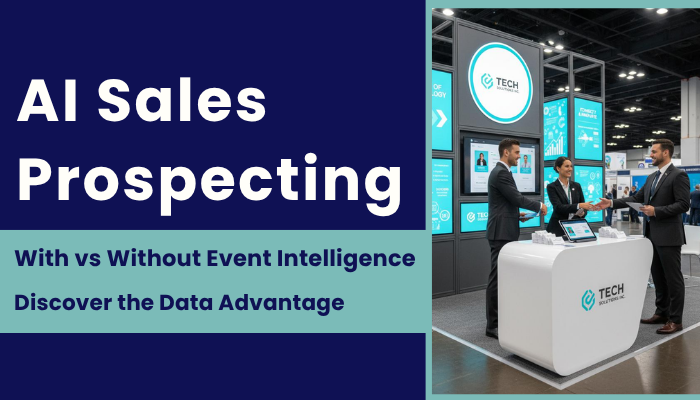
AI Sales Prospecting with vs Without Event Intelligence AI sales tools now handle a large share of a B2B rep's working day: the account list is ranked before the first meeting, the sequence is drafted before the...