
Table of Contents
Where to Find Trade Show Attendee Lists: 2026 Strategy Guide
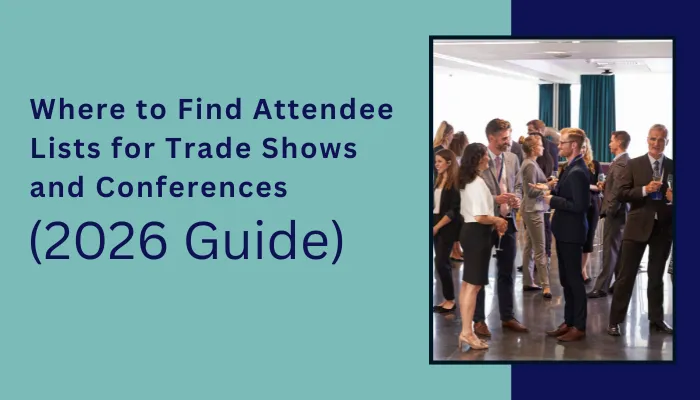
Where to Find Attendee Lists for Trade Shows and Conferences (2026 Guide)
Finding attendee lists for trade shows and conferences is one of the first things businesses try to do before committing time and budget to an event.
If you know which companies and professionals will be present, preparation becomes much easier. You can research those companies prior to the event, determine what types of conversations to have with them, and make appointments to meet. This data also helps determine if it even makes sense to attend in the first place. Prior to getting a list, most teams walk the exhibit floor talking to strangers and hoping for a relevant connection.
Preparation alters this dynamic completely. To start that process, you first need to understand what you are actually looking for.
What Is an Attendee List for Trade Shows and Conferences?
Identifying where to find a list requires defining the data points that actually impact your CRM. An attendee list is a record of people or companies registered to participate in an event, whether it is a conference, trade show, expo, or industry summit.
Depending on the organiser, these lists may contain information such as:
- Attendee and Company names
- Job titles or professional roles
- Industry category and geographic region
- Participation type, such as attendee, exhibitor, sponsor, or speaker
Some events publish limited participation directories while others only reveal participant information inside their event apps. Because of these limitations, businesses often need to combine multiple sources to build a clear picture of who will attend. This hunt for data is driven by a need for high-intent B2B networking.
Why Businesses Look for Attendee Lists Before Events?
Companies rarely attend trade shows just to wander around the floor. Most teams attend with specific goals, and the search for these lists is rooted in ROI.
According to Oxford Economics, for every dollar spent on business travel, companies realise $12.50 in incremental revenue. However, that return is heavily dependent on pre-event conversion. Data from Display Wizard suggests that 84% of exhibitors cite “high-quality attendees” as the primary factor for a successful show. This makes the “who” more important than the “how many.”
When participant information is available early, teams can plan their approach weeks before the event begins. Instead of improvising conversations at the booth, they walk into the event already knowing which companies they want to meet. This strategic shift moves the search from general interest to specific, common sources.
Also read- Why Trade Shows Are Still the #1 Channel for B2B Lead Generation in 2026
How Businesses Usually Find Attendee Lists?
Finding attendee lists is rarely straightforward. Most companies rely on a combination of public information sources and manual research to build their databases.
Official Event Websites
The first place most teams check is the official conference website. Event organisers typically publish several types of participation information including exhibitor directories, speaker lists, and sponsor pages. These sections rarely contain a complete participant list, but they do help identify companies actively involved in the event.
Event Networking Platforms
Many conferences now offer networking apps where registered participants can interact before the event. These platforms usually allow attendees to view participant profiles and browse company directories. However, access is typically limited to registered participants, which means you often cannot see the directory until you have already committed to the event.
Exhibitor Directories
Trade shows almost always publish exhibitor lists several weeks before the event. These directories typically include the company name, booth number, and a short description. Since exhibitors represent a segment of the audience actively looking to do business, many teams start their research here before moving to social channels.
Professional Networking Platforms
In the weeks leading up to large conferences, professionals often post online about their attendance. Monitoring these signals is vital, as 92% of B2B buyers engage with sales professionals who are known industry thought leaders. This method captures people who actively post online, but it is often inconsistent.
Event Participation Data Platforms
Some companies take a different approach. Instead of manually searching across multiple websites, they use specialised platforms that collect participation data from global events and organise it into searchable databases. Teams use these platforms to identify companies attending specific events and research decision makers connected to those organisations. However, choosing a source is only the beginning, as research often reveals significant gaps.
Common Gaps in Traditional Attendee Research
Identifying where to look is only half the battle. Most manual research methods result in incomplete data because event websites may list exhibitors but not attendees, and networking apps often restrict access until you register.
The manual research process is also expensive. Industry benchmarks from HubSpot indicate that sales representatives spend only 33% of their day actually selling, with the rest consumed by manual data entry and lead prospecting. Using a consolidated platform helps reclaim those hours by providing verified data in a single location. Understanding these gaps makes the manual research steps more logical.
Step-by-Step Guide to Identifying Conference Attendees Manually
If you choose to build a list without specialised tools, follow this logical progression to ensure your data is as clean as possible:
1. Review Exhibitor and Sponsor Lists: While these are technically “sellers,” they are your best clue to the participant profile. Use these lists to identify the “anchor companies” present, as they usually bring their top decision-makers who act as attendees at key sessions.
2. Expand Company Research: Search for those companies on LinkedIn and look for employees with the event name in their headers or recent posts. This turns an exhibitor list into a verified attendee list.
3. Build a Target Contact List: Compile a shortlist of decision makers, product leaders, and procurement executives attending the show.
4. Prepare Conversations Before the Event: Draft meeting requests and demo invitations at least three weeks out to ensure your schedule is full.
Step by Step Guide to Accessing Event Attendee Lists Using ExhibitorsData
To bypass the manual research phase, www.exhibitorsdata.com consolidates this information into a streamlined workflow:
1. Visit the ExhibitorsData Website: Open the site, navigate to the top right corner, and click the “Attendee Lists” header, or simply visit https://exhibitorsdata.com/attendees-list and scroll down to your specific industry, such as healthcare, technology, or manufacturing.
2. Search for the Event: Use the search function to locate the specific trade show or conference you are targeting.
3. Review Event Database Details: Verify the available data fields, which typically include company names, job titles, verified emails, and phone numbers.
4. Request a Sample List: Evaluate the data quality and relevance to your target audience before committing to the full database.
5. Access the Full Attendee and Exhibitor Lists: Once the quality is confirmed, download the data in an Excel or CRM-ready format.
6. Prepare Outreach Before the Event: Integrate the contacts into your marketing tools to schedule meetings weeks in advance. This structured approach directly impacts the final quality of your event preparation.
How Early Attendee Research Improves Event Preparation
The logic of finding a list early is supported by the Center for Exhibition Industry Research (CEIR), which found that 76% of participants arrive at a trade show with a pre-set list of booths they plan to visit.
If your company is not on that list before the doors open, you are competing for the remaining 24% of stray foot traffic. Early research ensures you are part of the priority group that attendees have already decided to meet. This advantage is maximised when the data is used correctly.
Also read- Top 10 Must-Attend Exhibitions at Fira de Barcelona 2026
Tips for Using Attendee Lists Effectively
- Prioritise decision makers: Focus your energy on professionals who influence purchasing or partnerships.
- Prepare personalised messages: Referencing a prospect’s specific industry role or product improves response rates.
- Follow up after the event: InsideSales found that 35% to 50% of sales go to the vendor who responds first. Day-zero follow-ups are critical for conversion.
Frequently Asked Questions
How can I find attendee lists for trade shows and conferences?
Businesses search official event websites, exhibitor directories, networking apps, professional platforms, and specialised participation databases.
Do conferences publish full attendee lists publicly?
Some publish partial directories, but many restrict access to registered participants or third-party data providers.
Are exhibitor lists the same as attendee lists?
No. Exhibitor lists include companies presenting products. Attendee lists include all participants such as visitors, buyers, and speakers.
How far in advance should I get an attendee list?
Aim to have your data 4–6 weeks before the event to ensure your sales team has enough time to book meetings.
Is it safe to use third-party event lists?
Yes, provided the source uses expert-vetted verification to ensure the data is accurate and compliant with marketing regulations.
Can I find attendee lists for free?
You can find soft lists via official exhibitor directories and LinkedIn hashtags, though these are rarely complete.
Final Thoughts
Trade shows and conferences remain one of the few environments where an entire industry gathers in one place. Companies that prepare early gain a clear advantage. Whether businesses gather the information manually or through a dedicated platform, the goal remains the same. Walk into the event knowing who is there, why they matter, and what conversations are worth having and you will surely end up with at least a calendar full of high-intent meetings rather than just a pocket full of business cards.

AI Sales Prospecting with Event Data: What Changes?
AI Sales Prospecting with vs Without Event Intelligence AI sales tools now handle a large share of a B2B rep's working day: the account list is ranked before the first meeting, the sequence is drafted before the...