
Table of Contents
Case Study: CMT 2026 Risk Avoidance
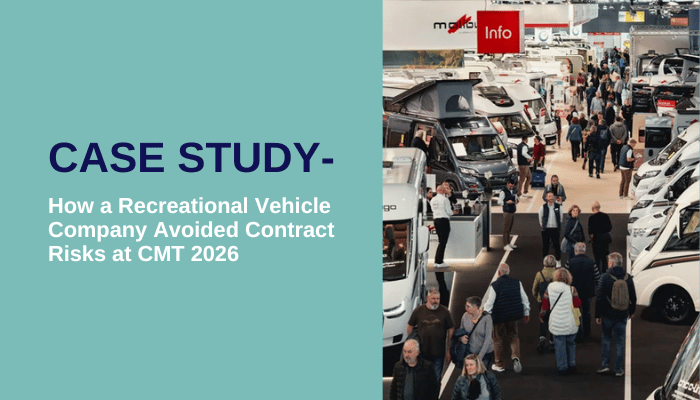
How a Recreational Vehicle Company Avoided Contract Risks at CMT 2026
As CMT 2026 approached, a major European RV manufacturer identified a potentially devastating operational risk. While many vehicles appeared to be produced by the presenting exhibitor, several exhibits represented only import shells or license-only brands with little understanding of their legal responsibilities regarding warranties or liability.
Public exhibitor lists provided names and categories but offered no clarity on which entity truly controlled the manufacturing. Exhibitors Data provided the firmographic intelligence necessary to distinguish true manufacturers from brand-license-only exhibitors, mitigating costly post-show liability risks.
Client Profile
The client is a German-based RV manufacturer attending CMT 2026, Germany’s leading trade show for recreational vehicles. The client aimed to:
- Determine which exhibitors were legally responsible for the products displayed.
- Establish the headquarters structure and employee count to verify operational capacity.
- Prevent partnerships with third-party intermediary shell companies pretending to be manufacturers.
They required structured data on company names, verified headquarters, employee size, and booth numbers to ensure every onsite interaction was legitimate.
Problem
Public listings suggested all brands were simple manufacturers, but this was not the case. Many “brands” at CMT were import-only or licensing entities. Consequently, contracts and warranty obligations could be outside the exhibitor’s control. Manual research was impractical because:
- Legal liability was hidden within complex corporate structures.
- Marketing materials often disguised the identity of the true manufacturer.
- Misidentifying a shell company presented risks of post-show warranty disputes and lost revenue.
There was no time for on-the-spot verification during the event.
Solution
Exhibitors Data employed a mapping strategy to create a legal and operational model for the client:
- Headquarters Mapping: Verified locations and descriptions to determine actual production sites.
- Capacity Verification: Utilised employee size and firmographic data to confirm the ability to support production and warranties.
- Entity Separation: Cross-referenced filings to separate licensees and import shells from true manufacturers.
- Booth Linking: Connected booth numbers to verified operating entities to guide the client to the correct desks.
This allowed the client to engage only with exhibitors possessing clear legal responsibility and operational authority.
Results
The curated data enabled the client to:
- Risk Avoidance: Reduced interactions with 12 shell or licensing-only exhibitors.
- Efficiency: Focused discussions on serious product purchases with 18 verified manufacturers.
- Security: Achieved zero post-event liability risks or warranty disputes.
- Confidence: Allowed the client to negotiate contracts during the show without wasting time on the floor.
Key Takeaways
- Intelligence over Identity: Firmographic and HQ intelligence identifies who has actual authority and responsibility.
- Risk Management: Mapping legal responsibilities reduces the likelihood of post-event disputes and lost revenue.
- Hidden Complexity: Exhibitor data reveals operational realities that marketing materials often hide.
- Strategic Tool: When using verified data, trade shows become a tool for risk management rather than just networking.

What Can You Do With Exhibitor and Attendee Data Before a Trade Show?
The Strategic Blueprint for Exhibitor and Attendee Data Exhibitor and attendee data is the most underutilised asset in the B2B world, mainly because most people treat it like a souvenir rather than a roadmap....